Wine Regions
The Six Wine Districts of Lake Balaton
Lake Balaton is one of Hungary’s most diverse wine destinations, with six distinctive wine districts spread around the lake and its wider surroundings: Badacsony, Balatonboglár, Balaton Uplands, Balatonfüred–Csopak, Somló and Zala. Together, they form the Balaton Wine Region, with more than 9,000 hectares of vineyards.
The lake helps create a distinctive climate for viticulture, while volcanic hills, limestone, loess and other soils give each wine district its own character. Olaszrizling is the most widespread grape variety, but the region is also home to distinctive local varieties such as Kéknyelű in Badacsony and Juhfark on Somló.
Want to learn more about Hungarian wine? Explore the official Wines of Hungary website.
Badacsony Wine District
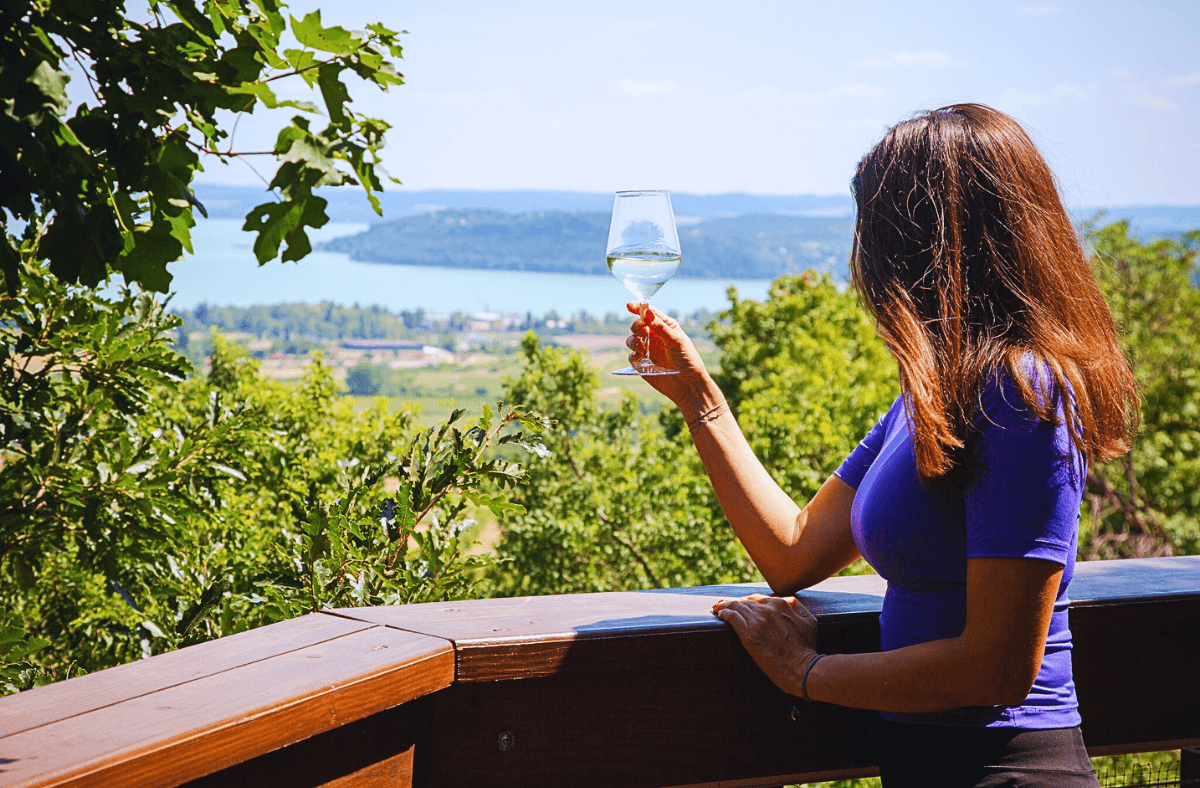
Volcanic hills, vineyards and Lake Balaton views make Badacsony one of Hungary’s most distinctive wine destinations. The vineyards stretch across the slopes of Badacsony and the surrounding volcanic hills, including Szent György Hill, Csobánc, Gulács and Tóti Hill, where basalt-rich soils help shape the character of the wines.
White wines dominate here, with Olaszrizling, Szürkebarát and Kéknyelű among the region’s signature varieties. Kéknyelű is particularly closely associated with Badacsony and is known for its distinctive mineral character. For visitors, the wine district combines cellar doors and wine terraces with hiking, panoramic viewpoints and some of the most recognisable landscapes of the Balaton Uplands. Find out more
Balatonfüred–Csopak Wine District
Stretching along the northern shore of Lake Balaton from Balatonfőkajár to Zánka, the Balatonfüred–Csopak Wine District combines beautiful vineyard landscapes with some of the lake’s best-known wine towns. Its varied soils range from limestone and marl to the distinctive red Permian sandstone found around Csopak.
Olaszrizling is the signature grape here, producing wines that reflect the different vineyards and soils of the region. Balatonfüred, Csopak and the surrounding villages offer plenty of opportunities to experience this wine culture through cellar visits, wine terraces and local gastronomy – often with sweeping views over Lake Balaton. Find out more
Balaton Uplands Wine District
Set between the better-known wine districts of Badacsony and Balatonfüred–Csopak, the Balaton Uplands Wine District stretches across a remarkably varied landscape of volcanic hills, limestone slopes and historic vineyard villages. The Káli Basin is one of its best-known areas, while vineyards around Sümeg, Tapolca and the western Balaton Uplands add even more diversity to the region.
Olaszrizling plays an important role here, alongside a range of other white grape varieties shaped by the district’s varied soils and microclimates. For travellers, this is a wine region made for slow exploration: small villages, family-run wineries, vineyard roads and the distinctive landscapes of the Káli Basin combine wine tasting with one of the most atmospheric parts of the Balaton Uplands. Find out more
Balatonboglár Wine District
On the southern shore of Lake Balaton, the Balatonboglár Wine District stretches across the rolling hills of Somogy, where vineyards grow mainly on warm, loess-based soils. The landscape and climate create excellent conditions for a wide range of wine styles, making this one of the most diverse wine areas around the lake.
Fresh, fruit-driven white wines, rosés and increasingly serious red wines are all part of Balatonboglár’s character, while the district is also well known for sparkling wine. Chardonnay and Olaszrizling are important white varieties, alongside red grapes such as Kékfrankos and Merlot. For visitors, the gentle vineyard hills, family wineries and cellar experiences offer a different perspective on Lake Balaton’s wine culture. Find out more
Zala Wine District
West of Lake Balaton, the Zala Wine District unfolds across the rolling hills and valleys of Zala County, stretching towards the Croatian and Slovenian borders. Its vineyards are scattered across a varied landscape, from the Keszthely Hills and Zala Valley to the hills around Zalakaros, Zalaszentgrót and Nagykanizsa.
Zala’s cooler, wetter and more balanced climate gives the wine district a character of its own within the wider Balaton Wine Region. For travellers, wine tasting can easily become part of a slower journey through western Balaton and Zala, combining vineyard landscapes, small wine-producing villages and nearby destinations such as Zalakaros and the western end of Lake Balaton. Find out more
Somló Wine District
North of Lake Balaton, the solitary volcanic Somló Hill rises dramatically from the surrounding plain. Although geographically separate from the lakeshore, Somló belongs to the wider Balaton Wine Region and is one of Hungary’s smallest and most distinctive wine districts. Its vineyards climb the basalt slopes of Somló Hill, with smaller areas on Ság Hill and Kis-Somlyó.
White wines define Somló, with Juhfark, Olaszrizling, Furmint and Hárslevelű among its traditional varieties. Juhfark is particularly closely associated with the hill, producing characterful wines that reflect Somló’s volcanic soils and naturally high acidity. For visitors, the compact wine district combines cellar visits and volcanic wines with vineyard walks, historic press houses and the striking landscape of Somló Hill. Find out more