Visitor Essentials
Visitor Essentials – Your Practical Guide to Lake Balaton
Planning a trip to Lake Balaton? Whether you're arriving by car, travelling by train or exploring the region without your own vehicle, a little local knowledge can make your stay much easier.
This guide brings together the essentials: travel documents, transport, motorway tolls, ferry crossings, payments, healthcare, lakeside safety and other useful information to help you travel with confidence.
1. Lake Balaton at a Glance
Lake Balaton, often called the “Hungarian Sea”, is Hungary's largest lake and one of Central Europe's most popular freshwater holiday destinations. Located in western Hungary, it stretches approximately 77 kilometres from east to west, with an average water depth of around 3.3 metres.
The southern shore is known for its extensive shallow bathing areas and lively summer resorts, while the northern shore is characterised by vineyards, historic towns and the hills of the Balaton Uplands.
Popular destinations include Siófok, Balatonfüred, Tihany, Badacsony, Keszthely and Hévíz, each offering a different way to experience the region.
2. Travel Documents and Entry Requirements
Hungary is a member of the European Union and the Schengen Area. Visitors who are EU citizens, including travellers from Germany, Austria, Poland and Slovakia, can enter Hungary with a valid passport or national identity card.
Children and minors must also have their own valid travel document. A driving licence is not accepted as a substitute for a passport or national identity card.
Although routine border checks are generally absent between Schengen countries, temporary checks may be introduced. Always carry a valid travel document when travelling internationally.
Visitors from outside the EU may need a visa, depending on their nationality, residence status and purpose of travel. Additional passport validity and entry requirements may also apply.
For the latest requirements, including information for non-EU nationals and families travelling with children, consult the European Union's official travel document guide before departure.
3. Getting to Lake Balaton by Car
Lake Balaton is easily accessible from Budapest and neighbouring countries via Hungary's road network. The M7 motorway provides the main route from Budapest towards the southern shore, while other major and regional roads connect the northern and western parts of the lake.
Driving times depend on your starting point, destination and traffic conditions. During summer weekends and public holidays, allow extra time for your journey, especially on the M7.
Motorway vignette: Most Hungarian motorways and expressways require a valid electronic toll vignette (e-matrica). Options include one-day, 10-day, monthly and annual permits, as well as regional options.
Buy your vignette before using a toll road and double-check your registration number, country of registration, vehicle category and validity period. Special care is needed when travelling in a campervan or towing a trailer, as the correct toll category depends on the vehicle's registration details.
You can purchase your vignette through the official Hungarian e-vignette website.
Parking: Parking regulations and fees vary between towns and individual car parks. Paid parking is common in popular lakeside areas, particularly during the main tourist season. Always check local signs, payment instructions and charging hours before leaving your vehicle.
4. Getting to Lake Balaton by Train
Travelling by train is a convenient alternative to driving, particularly from Budapest. Railway lines serve many towns around the northern and southern shores, including Siófok, Balatonlelle, Fonyód, Balatonfüred and Keszthely.
Services and journey times vary throughout the year, with additional trains and seasonal connections often available during the summer. International visitors can plan their onward journey to Balaton through Hungary's main railway network.
Tickets, timetables and service updates are available from MÁV Group, Hungary's national public transport operator.
If you are bringing a bicycle, check the conditions for your chosen train. A bicycle ticket and, on certain services, a separate bicycle space reservation may be required.
5. Getting Around Lake Balaton Without a Car
Exploring Lake Balaton without a car is possible, especially when travelling between well-connected lakeside towns. Regional trains, intercity and local bus services, ferries and seasonal passenger boats provide a range of options.
However, not every village, winery or countryside attraction is easily accessible by public transport. Services can be less frequent outside the summer season, on weekends or in smaller settlements.
For journeys involving several connections, use the MÁVPlusz public transport journey planner to compare train and bus routes, check connections and view available service information.
Cycling can also be a practical option for shorter journeys and exploring the surrounding countryside. For routes, bicycle rentals and cycling-friendly accommodation, see our Lake Balaton Cycling Guide.
6. Ferry Services and Passenger Boats
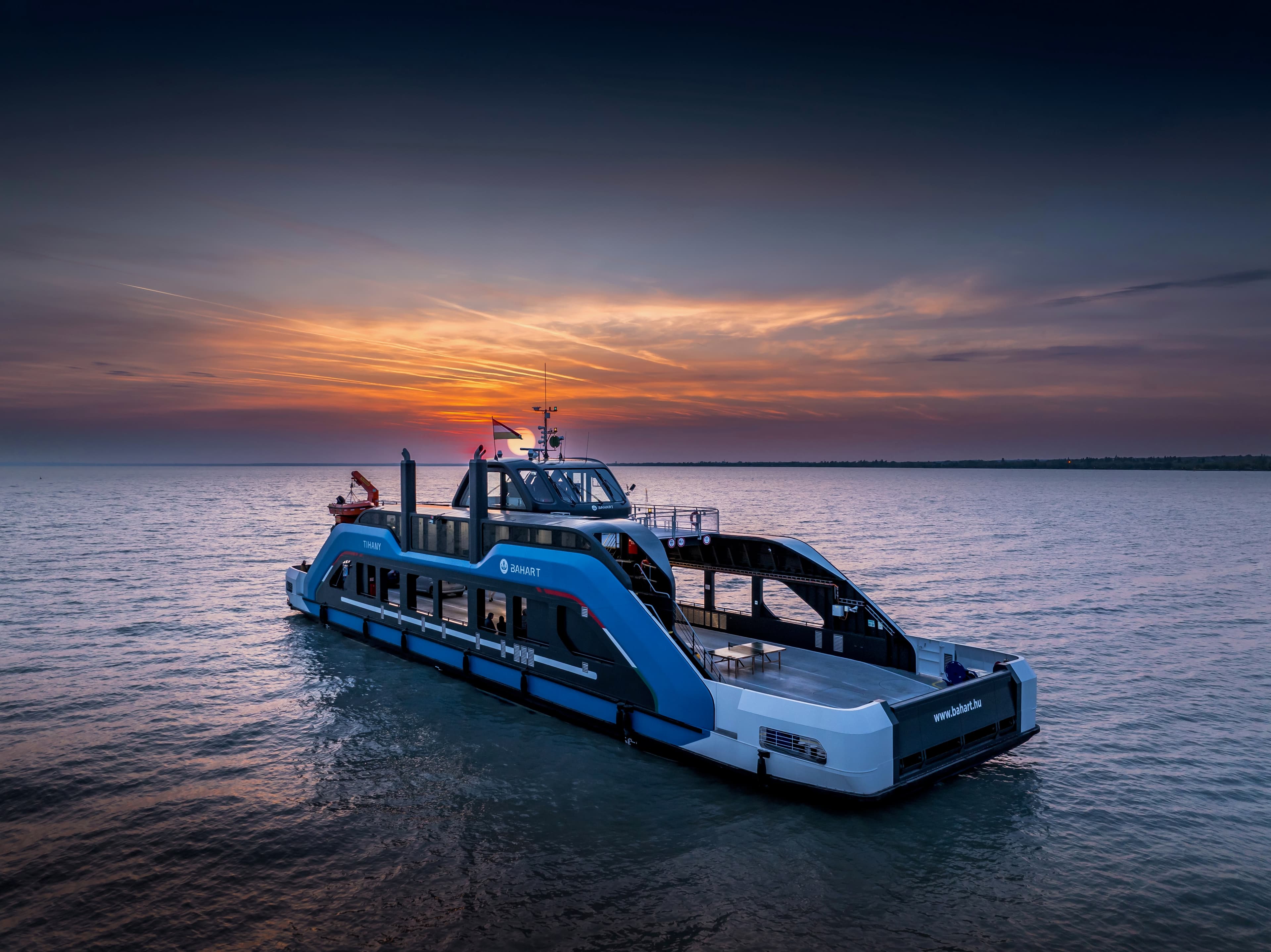
The Szántód–Tihany ferry connects the southern and northern shores across one of the narrowest parts of Lake Balaton. The crossing takes approximately eight minutes and accommodates pedestrians, cyclists and motor vehicles.
The ferry operates throughout the year, subject to weather, ice conditions and operational changes. Departure times and frequency vary according to the season and demand.
Tickets: Pedestrian and bicycle ferry tickets can be purchased online, while travellers taking a car must purchase their vehicle and passenger tickets at the ferry terminal.
Lake Balaton also has scheduled passenger boats and sightseeing cruises, mainly operating during the warmer months. Routes and departure points vary seasonally.
Check the latest ferry timetable, ticket conditions and sightseeing services on the official BAHART website.
7. Weather and Storm Warnings
Lake Balaton has warm summers, but conditions can change quickly, especially during thunderstorms. Strong winds can create dangerous conditions for swimmers, sailors, paddleboarders and other water users.
During the official storm warning season, from 1 April to 31 October, flashing yellow lights around the lake indicate two warning levels:
First-level warning – 45 flashes per minute: Swimming is permitted only within 500 metres of the shore, subject to other applicable restrictions.
Second-level warning – 90 flashes per minute: Swimming in the lake is prohibited.
Warning signals can differ between sections of the lake, so always pay attention to the signals in your immediate area.
Before swimming or planning any water activity, check the latest forecasts and storm warnings through HungaroMet's official Lake Balaton weather service.
For seasonal weather conditions and swimming information, read our Lake Balaton Climate Guide.
8. Water Safety and Emergency Contacts
Lake Balaton is a popular destination for swimming and water sports, but visitors should always follow local safety signs, swimming boundaries and storm warnings.
Children should be supervised closely near the water, even in shallow areas. If you are using a paddleboard, kayak or sailing boat, check the weather and the applicable water safety regulations before setting off.
In an emergency, call 112. This is the European emergency number and connects callers with the appropriate emergency services in Hungary.
For emergencies on the water, the Water Rescue Services can also be contacted directly at +36 30 383 8383.
For more information about water rescue operations and lake safety, visit the Water Rescue Services of Hungary.
9. Healthcare and Travel Insurance
Medical services, pharmacies and hospitals are available in the Lake Balaton region, although access to particular services may vary by town and season.
Visitors insured in an eligible European country should bring their European Health Insurance Card (EHIC). The card provides access to medically necessary state-provided healthcare during a temporary stay, under the same conditions as those applying to people insured in Hungary.
The EHIC does not automatically cover private healthcare, all additional charges or repatriation. Comprehensive travel insurance is therefore strongly recommended, particularly for visitors planning water sports or other active holidays.
For more information, consult the European Commission's guide to using the EHIC in Hungary.
For urgent medical assistance, call 112.
10. Money, Payments and Everyday Essentials
Hungary's official currency is the Hungarian forint (HUF). Although some tourist businesses may accept euros, exchange rates and payment conditions can vary.
Debit and credit cards are widely accepted in hotels, restaurants, supermarkets and many attractions. Nevertheless, carrying a small amount of Hungarian cash is useful for local markets, small vendors and places where card payments may not be available.
Beaches: Lake Balaton has both free-access swimming areas and beaches charging an entrance fee. Facilities, opening times and admission charges vary between locations, especially outside the main summer season.
Tourist tax: Some accommodation providers collect a local tourist tax in addition to the room price. Rates and exemptions are determined locally, so check whether this charge is included when booking.
Opening hours: Smaller shops, attractions and seasonal restaurants may have shorter opening hours outside summer. Public holidays can also affect shopping and services, so check opening times in advance.
11. Fishing at Lake Balaton
Lake Balaton is a well-known destination for recreational fishing, with species including carp, zander, catfish and bream.
Fishing requires the appropriate legal fishing documents and a valid permit for the relevant fishing area. Visitors must also comply with the current Lake Balaton fishing regulations, which cover permitted methods, protected periods, catch limits and other restrictions.
Foreign visitors should check the available licensing arrangements before fishing, as a local day ticket alone may not satisfy all requirements.
For current regulations, permit information and official guidance in English, visit Balaton Fish Management's official English-language information page.
12. Live Webcams and Useful Travel Updates
Want to see what Lake Balaton looks like before you arrive? Live webcams provide views of the shoreline, beaches, harbours and surrounding landscapes throughout the year.
The Időkép Lake Balaton webcam collection includes cameras in locations such as Siófok, Balatonfüred, Badacsony, Keszthely and Tihany.
Remember that a webcam shows conditions at one location and does not replace official weather forecasts or storm warnings.
Before travelling, it is worth checking transport timetables, local opening hours and any weather-related changes, particularly during the quieter months.
A little preparation goes a long way. With the right travel information, you can spend less time dealing with practical details and more time discovering Lake Balaton.