The Legend of the Goat's Hoof in Tihany

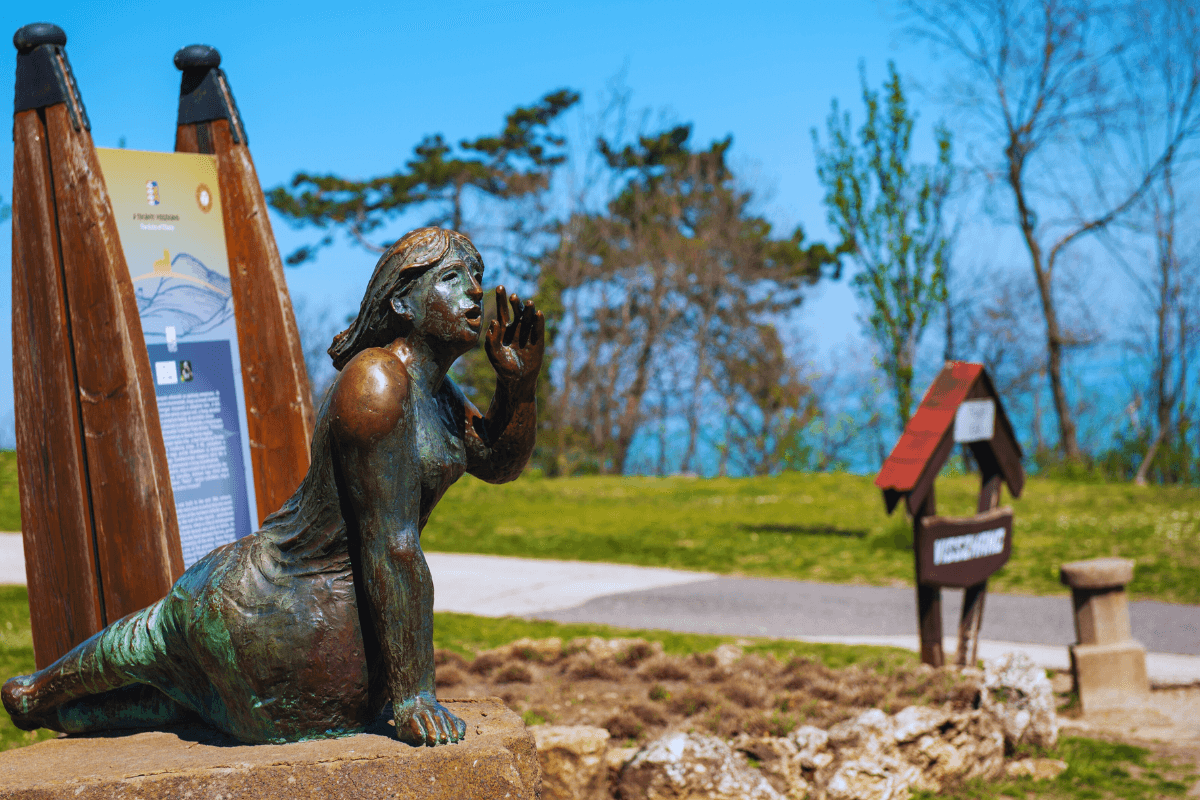
Long ago, on the hills of the Tihany Peninsula, a beautiful young maiden tended a herd of golden-haired goats. Although she was admired for her beauty, she could not speak a single word.
One day, the ruler of Lake Balaton offered to restore her voice in exchange for milk from her goats to help his sick son. The maiden agreed, and her voice became as beautiful as a song. But as time passed, she grew proud and refused to sing for the young prince, who had fallen deeply in love with her. Heartbroken, he died, leaving his father overcome with grief and anger.
According to the legend, the ruler of the lake called upon the mountain to punish the maiden. Flames rose from the hillside, frightening her golden goats into the waters of Lake Balaton, where they disappeared beneath the waves.
Yet the lake did not keep every trace of them. Small, hoof-shaped stones began washing ashore, and people believed they were the remains of the lost golden herd. The maiden's fate also became part of another famous local story: the legend of the Tihany Echo.
Discover the Place Behind the Legend
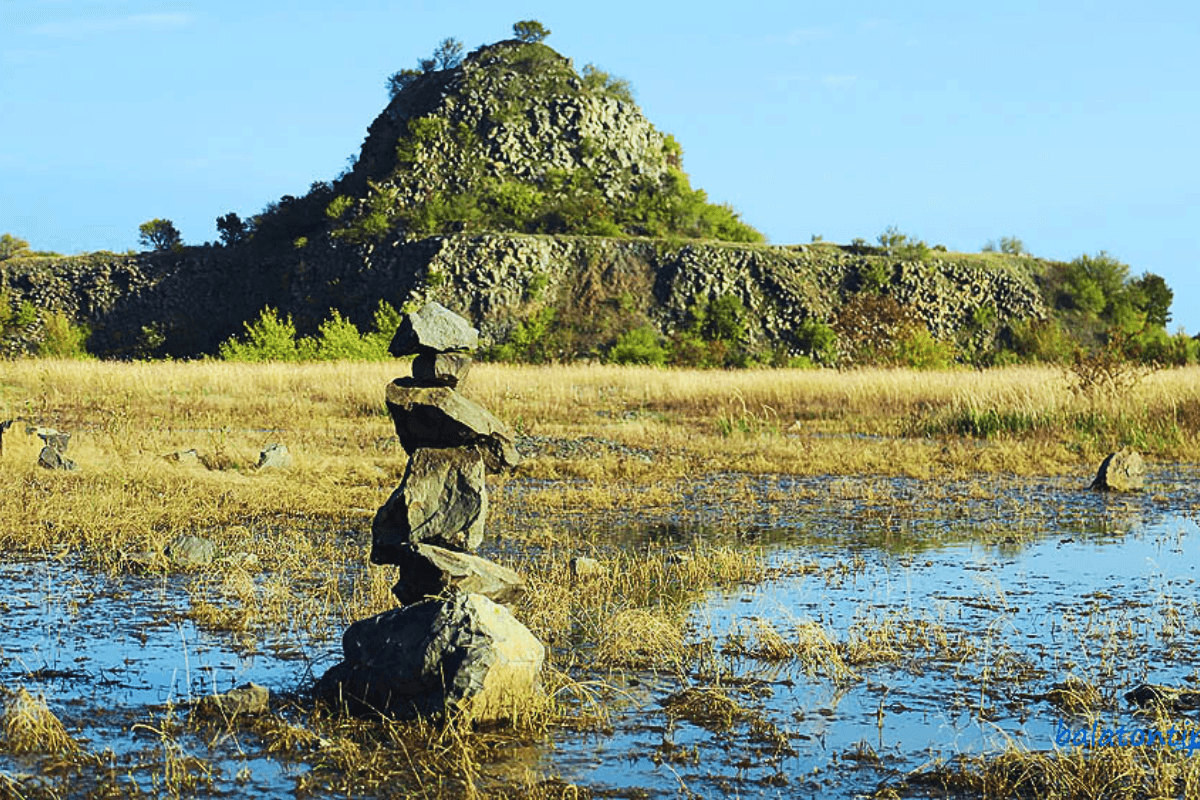
The so-called goat's hooves are real, but their origin is far older than the legend. They are weathered fossils of an ancient bivalve species, Congeria ungula caprae, which lived in the gradually freshening waters of Lake Pannon millions of years ago. Their distinctive shape gave rise to the local name kecskeköröm, meaning goat's hoof.
These unusual fossils became one of Tihany's best-known natural curiosities. In the past, local children even collected and sold them to visitors as souvenirs.
To discover more about the peninsula's remarkable geological past, visit the Lavender House Visitor Centre, near Tihany's Inner Lake. Its interactive exhibitions introduce the area's volcanic history, rocks, fossils and natural heritage.