Boating History
Historic Boats on Lake Balaton – Tracing Legends, Steamships and Sailing Yachts
Lake Balaton is home to a number of unique and historic boats. As early as 1753, the Festetics family built a salt cargo ship that carried 12 wagons of salt to Keszthely. In 1797, György Festetics created the Phönix, a grand 31.5-meter ship with a 50-member crew, used as a luxury yacht for royal guests.
Cruising began in earnest in 1846 with the first paddle-wheel steamer, connecting Balatonfüred to other towns like Keszthely and Alsóörs. These early vessels soon became symbols of progress and elegance along the lake. When the Sürgöny newspaper announced Queen Elisabeth’s planned visit to Balatonfüred in 1866, excitement swept across the region. Although the Queen never arrived, the preparations brought new castles, stylish railway stations and refined steamships, shaping the lake’s early golden age of travel.
Around the same time, Count Ödön Batthyány emerged as one of the most influential figures in Hungarian sailing. His 75-tonne yacht, Soaring Cloud, achieved international success against British competitors, and by the 1880s nearly 70 sailboats of different types criss-crossed the lake. This flourishing sailing culture set the stage for several legendary vessels that would later become icons of Balaton.
Among them are the historic sister ships Helka and Kelén, launched in 1891 and still in operation today. Originally steam-powered and converted to diesel in 1962, they now run as nostalgic passenger ships. Their stories are as rich as their age: the Helka once froze into the lake and had to be rocked free by people dancing on its deck, and even spent a short period as a lakeside café before being fully restored. Their names trace back to a 19th-century Balaton legend about two lovers – Helka, the nobleman's daughter from Tihany, and Kelén, a humble shepherd – whose romance became part of the lake’s folklore and later lent its magic to the two iconic vessels.
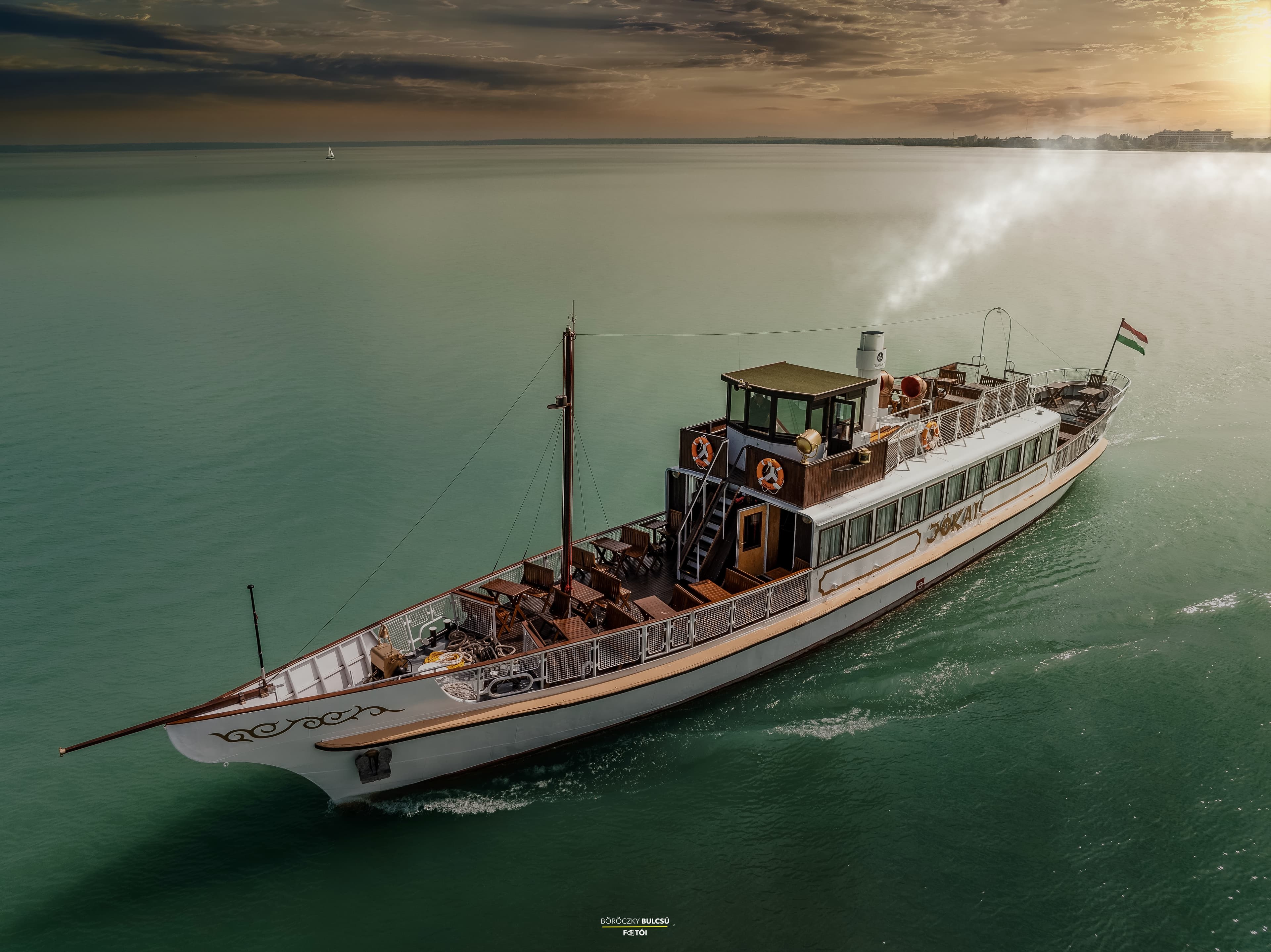
Balaton’s maritime heritage includes other remarkable ships as well. The Kisfaludy, the very first paddle-wheel steamer of the lake (1846–1887), has been faithfully reconstructed, offering rare insight into mid-19th-century cruising. The Jókai, a 1913 steamship that survived two world wars, sinking and multiple reconstructions, ranks among the oldest service vessels of the lake’s history. Another legendary name, the Hableány, originally built in the 19th century and lost in a tragic sinking, lives on today through a nostalgic replica that evokes the elegance of its era.
Alongside these historic steamers and passenger ships stands one of Hungary’s most impressive racing yachts: the Sirocco, a large and elegant 75-sail cruiser built as one of only three vessels of its kind. Today it is available for charter, attracting sailing enthusiasts with its graceful lines and ideal setting for atmospheric sunset cruises.
Together, these boats – from early paddle-wheel steamers to legendary sister ships and grand sailing yachts – reflect more than technical achievement. They tell the story of Lake Balaton’s evolving culture: royal visits that never happened yet still reshaped the region, heroic feats of sailing, shipwrecks and restorations, and timeless tales that tie the vessels to the landscape and the people who have cherished the lake for centuries.